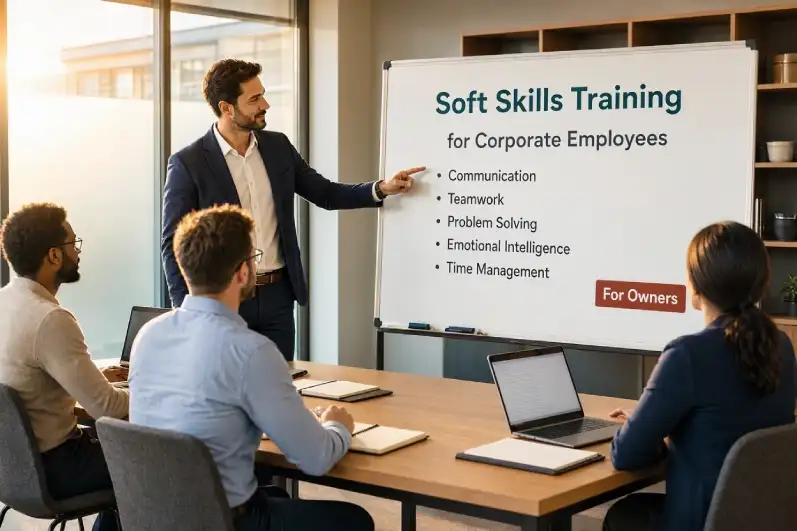
Soft skills training for corporate employees in Dubai helps people speak clearly, listen properly, work well with different teams, handle pressure, and solve problems without panic. In simple words, it teaches the human side of work. Technical knowledge may get a person hired. Soft skills often decide whether that person grows, leads a team, keeps clients happy, or gets stuck in the same role for years.
Dubai is a very special place for this kind of training. One office can have people from India, the Philippines, Egypt, the UK, Nigeria, Pakistan, Lebanon, and many other countries. Everyone may speak English, but not in the same way. One person may be very direct. Another may feel that direct words sound rude. A manager may think silence means agreement, while an employee may stay quiet because respect matters more in their culture. This is exactly why soft skills training matters so much in Dubai workplaces.
Coach Tulika Singh offers soft skills training for corporate employees in Dubai with a practical and human approach. The focus is not only on slides and theory. It is on real office situations, real conversations, and real behaviour change.
Why Dubai Companies Need Soft Skills?
Dubai companies work fast. Deadlines change. Clients expect quick replies. Teams often sit in different buildings or even different countries. A person may join a meeting in the morning, handle a client call in the afternoon, and write a report before leaving. In such a workplace, good technical work is not enough.
Imagine a sales executive who knows the product very well but cannot explain it simply. The client gets confused. Or think about a team leader who is excellent at planning but becomes angry when someone makes a mistake. The team may follow instructions, but they will not feel safe sharing ideas. Slowly, good people may leave.
Soft skills training helps with these everyday problems:
- Speaking with clarity in meetings and client calls
- Writing emails that are polite, short, and easy to understand
- Listening without interrupting
- Giving feedback without hurting someone
- Handling angry customers calmly
- Working with people from different cultures
- Managing time when too many tasks arrive together
- Staying confident during presentations
- Resolving conflict before it becomes a big issue
- Leading a team with trust and respect
These things look small. But together, they change how a company feels from inside.
What Soft Skills Really Mean?
Many people think soft skills mean being extra polite or giving big smiles. That is only one small part. Soft skills are the abilities that help a person work well with other people and handle their own emotions.
For example, emotional intelligence means noticing when a colleague is stressed instead of adding more pressure. It also means understanding your own anger before replying to a difficult email. A person with strong emotional intelligence may pause, breathe, and write a calm response instead of sending something they will regret later.
Communication is another big one. It does not mean using difficult English words. In fact, the best corporate communicators often use simple words. They say what they mean. They check whether the other person understood. They do not hide important information behind long sentences.
Teamwork is also a soft skill. It means sharing credit, asking for help when needed, and not treating every colleague like competition. In Dubai, where teams are multicultural, teamwork also means respecting different working styles. Some people like detailed instructions. Others prefer freedom. A good team learns to adjust.
Coach Tulika Singh’s Approach
Coach Tulika Singh believes corporate training should feel useful from day one. Employees should not leave a session thinking, “That was nice, but what now?” They should leave with something they can use in their very next meeting, email, client call, or team discussion.
The training can be designed for different groups:
- New employees who need workplace confidence
- Customer service teams who deal with clients daily
- Sales professionals who need better communication and persuasion
- Managers who want to lead with clarity and empathy
- Senior leaders who need stronger presence and decision-making skills
- Support teams handling pressure, complaints, and tight deadlines
- Multicultural teams that need better understanding and cooperation
Sessions may include role plays, group discussions, real case examples, feedback exercises, and simple action plans. For example, a participant may practise handling a client who says, “Your service is too slow.” Instead of becoming defensive, they learn how to acknowledge the concern, ask the right questions, and offer a clear next step.
That is the real value. Not memorising definitions. Learning how to behave better when work gets difficult.
Common Workplace Problems Training Can Fix
Every company has its own issues, but some problems appear again and again.
Miscommunication
A manager says, “Please finish this soon.” The employee thinks “soon” means tomorrow. The manager means today by 4 pm. Nobody asked. Work gets delayed. Then both sides feel frustrated.
Soft skills training teaches people to confirm expectations. A better sentence could be, “Just to confirm, do you need this by 4 pm today or tomorrow morning?” Such a small question can save hours of confusion.
Poor Feedback
Some managers avoid feedback because they do not want to hurt feelings. Others give feedback so directly that employees feel attacked. Both approaches create problems.
Good feedback is specific, respectful, and useful. Instead of saying, “Your work is not good,” a manager can say, “The report has good data, but the summary needs to be shorter and clearer. Please highlight the main points at the top.” Now the employee knows exactly what to improve.
Conflict in Teams
Two colleagues may disagree about how to handle a project. One wants to move fast. The other wants more checking. If they do not talk properly, the disagreement can turn personal. They may stop sharing information. The whole team suffers.
Training helps employees separate the problem from the person. It teaches them to say things like, “I understand your concern about quality. Can we agree on a quick review step before submission?” This keeps the discussion professional.
Low Confidence
Some employees have strong ideas but stay quiet in meetings. They worry their English is not perfect. Or they think senior people will not listen. Later, someone else says the same idea and gets appreciation.
Soft skills training builds confidence through practice. When people speak in a safe training space, receive kind feedback, and try again, their fear reduces. Confidence does not come from telling someone to “be confident.” It comes from doing the thing again and again until it feels normal.
Why Multicultural Communication Matters in Dubai?
Dubai’s workplace culture is one of its biggest strengths. People from many countries work side by side. But this also means misunderstandings can happen easily.
A phrase that sounds normal in one culture may sound too sharp in another. For example, “This is wrong” may feel very harsh to some people. A softer version could be, “I see it differently. Can we check this part again?” The message is still clear, but the tone is more respectful.
Body language also matters. Eye contact, silence, hand movements, and personal space can mean different things to different people. A trainer who understands multicultural workplaces can help employees notice these differences without judging anyone.
Coach Tulika Singh’s training keeps this reality in mind. The goal is not to make everyone behave in exactly the same way. The goal is to help people communicate in a way that is clear, respectful, and effective across cultures.
Training for Managers Is Very Important
Employees often copy their managers. If a manager shouts when stressed, the team learns to hide mistakes. If a manager listens properly, the team feels safe to speak up. This is why soft skills training for managers is not a luxury. It is a business need.
A manager trained in soft skills can:
- Set clear expectations
- Give balanced feedback
- Handle difficult conversations calmly
- Support team members without doing their work for them
- Make decisions without creating fear
- Recognise good work
- Manage conflict early
- Build trust across departments
Leadership is not about having a big title. It is about how people feel after speaking to you. Do they feel heard? Do they know what to do next? Do they trust the direction? These questions matter more than fancy job titles.
What Companies Can Expect After Training?
No training can magically change an entire company in one day. Anyone who promises that is overselling. But good soft skills training can start a visible shift when employees practise what they learn.
Companies may notice:
- Fewer repeated explanations and misunderstandings
- Better client conversations
- More confident presentations
- Calmer handling of complaints
- Improved teamwork between departments
- Less gossip and more direct communication
- Stronger ownership of tasks
- Better employee morale
- More respectful manager and employee relationships
The key is follow-up. One workshop can create awareness. Practice creates habit. Managers should encourage employees to use the tools after training. For example, a team can start meetings with a simple check: “What is the main goal today?” or “Does everyone understand the next step?” These small habits keep learning alive.
How to Choose the Right Training?
Not every training programme suits every company. A real estate team may need client communication and negotiation skills. A hospital support team may need empathy, patience, and stress management. A tech company may need cross-team communication and presentation skills.
Before choosing a programme, companies should ask:
- What exact problem are we trying to solve?
- Which employees need this training first?
- Will the sessions include practice, not only theory?
- Can the content be adjusted to our industry?
- Will employees get simple tools they can use immediately?
- Is there a plan for follow-up and measurement?
Coach Tulika Singh focuses on making training relevant to the company’s actual work culture. Generic content may sound impressive, but customised training creates better results.
Frequently Asked Questions
Soft skills training teaches employees how to communicate, listen, work in teams, manage emotions, handle conflict, and lead better. In Dubai, it also helps multicultural teams understand each other and work smoothly. Coach Tulika Singh provides practical sessions based on real workplace situations.
Anyone can benefit, but it is especially useful for customer service teams, sales staff, managers, team leaders, new employees, and senior professionals. Companies in Dubai often train whole teams so everyone learns a common way to communicate and solve problems together.
It depends on the company’s goal. Some teams need a short workshop of a few hours. Others need a full-day session or a series of sessions. Coach Tulika Singh can design training based on the team size, job roles, and specific workplace challenges.
Yes. When employees communicate clearly, manage pressure, and work better with others, daily work becomes smoother. Fewer misunderstandings mean fewer delays. Better client handling can improve trust and business results. The biggest change usually comes when managers support employees to use the new skills regularly.